The use of Microframework for Portable and Distributed ePortfolio Development
Authors: Irwan Alnarus Kautsar¹, Riyanarto Sarno²
¹ Department of Informatics, Faculty of Engineering, Universitas Muhammadiyah Sidoarjo, Indonesia
² Department of Informatics, Faculty of Information Technology, Institut Teknologi Sepuluh Nopember (ITS), Surabaya, Indonesia
Published in: 2019 IEEE International Conference on Engineering, Technology and Education (TALE), Yogyakarta, Indonesia, December 10-13, 2019. pp. 1–6
DOI: 10.1109/TALE48000.2019.9225965
IEEE: https://ieeexplore.ieee.org/document/9225965
Abstract
ePortfolio is an essential tool used to track and evaluate the learning process. This paper presents the current development of a web-based ePortfolio system developed with a Microframework. ePortfolio is commonly used as a tool to track and evaluate students' artifacts as a result of course assignments. Furthermore, ePortfolio is needed for lecturers implementing Project-Based Learning (PBL) and Lab-Based Education (LBE). On the other hand, the lack of internet access is still an issue in Indonesia as a developing country, so ePortfolio needs to be accessed in both online and offline conditions.
The proposed method is to develop a web-based application using a Python-based micro-framework. The web-based application enables users to use it in offline conditions (no internet access). As a result, a web-based application is used by both students and lecturers to upload and evaluate uploaded artifacts and synchronize its contents to the existing University Information Systems. As part of the development process, the proposed ePortfolio has been tested on a mini device installed with an Access Point (AP). With this approach, lecturers and students can use the web-based ePortfolio in the classroom with no internet conditions, then synchronize the artifacts to the ePortfolio server in a distributed manner when the mini device connects to the existing university ePortfolio.
Keywords: ePortfolio, Higher Education Institution, Project-Based Learning
I. Introduction
The main goal of Industry 4.0 Strategic Initiatives elaborated by the Ministry of Research, Technology and Higher Education (RTHEI) Indonesian Government is to achieve Competitiveness and Sustainability in Industry and Higher Education Institutions (HEI) [1]. HEI academic courses must adapt the learning process for the need not only in the theoretical area but also practice in the digital creative industries in the Industry 4.0 era [2], [3].
Project-Based Learning (PBL) offers a challenge for students to apply knowledge and skills by creating an application to solve real-world problems [4], [5]. Lab-Based Education is an educational methodology implemented by the majority of universities in Japan to enhance research and publication [6].
The use of an electronic-based portfolio (ePortfolio) in HEI becomes an important tool to track, evaluate, and recognize academic stakeholders' (lecturers and students) achievements [7], [8]. For lecturers, ePortfolio documents academic activities (teaching and research). For students, it stores the progress made in the learning process [9].
Our previous research presented Lecturer Based Supportive Tools (LBST) that helps lecturers create learning content in online and offline conditions [10], [11], and discussed interoperability among the LMS and distribution systems with a web service-oriented architecture [12]–[14]. As a complement, this paper proposes a supportive tool that supports students submitting their progress report and artifacts while lecturers implement PBL and LBE.
II. Problem Analysis
A. Student Report, Grading
One advantage of ePortfolio (or LMS) is full support for grading based on student reports. Lecturers need to know the learning process by asking questions like: "At what time did they mostly submit?", "Did they find difficulties while submitting?", "Which submission gains more attention?". Existing ePortfolio and LMS offer many features, but few support the lecturer to grade student submissions on the existing university information systems.
B. Digital Divide
Existing ePortfolio and LMS are designed to be centralized systems. The installation process needs more effort for a beginner user [15]. Indonesia, as a developing country, still faces digital divide issues [16], [17]. These conditions cause ePortfolio and LMS to be slow to spread and adapt to the learning process, especially at the higher education level [18].
C. Research Question
"How do we provide students with a web-based ePortfolio that can be used in offline and online conditions for student reports, lecturer grading, and export the results in existing information systems?"
III. Proposed Method
We propose to develop a web-based ePortfolio accessible in online and offline conditions. Using a web-based micro-framework such as Flask and the Python library WSGI, it is possible to develop web applications that adapt to both conditions [19].
A. Architecture
The proposed ePortfolio project name is YADeH (Yet Another Distributed ePortfolio for Higher Education). There are two versions: - YADeH-server — accessed online - YADeH-node — designed to be implemented on a mini device or used offline
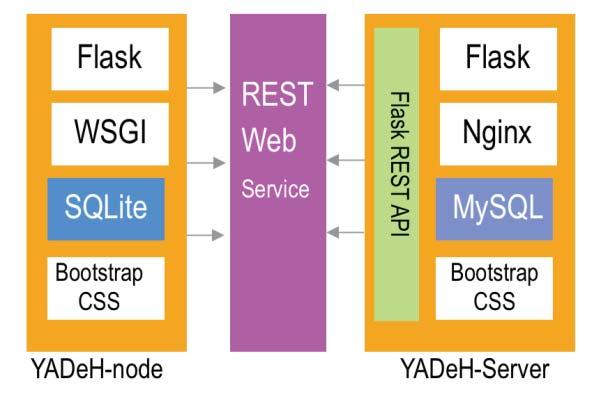 Fig. 1. Proposal for YADeH architecture
Flask Web Framework is a Python-based web framework with an extremely small size (version 1.0.2 is 732 KB) [19]. It includes Werkzeug, a small WSGI that enables running the Flask web application with a single command while running a web server [21]. This means a user does not need to install an Apache/Nginx web server while installing the YADeH-node version.
Flask adapts an MVC (Model-View-Controller) framework separating the application layer and presentation layer. The .py files and .html files are in different directories.
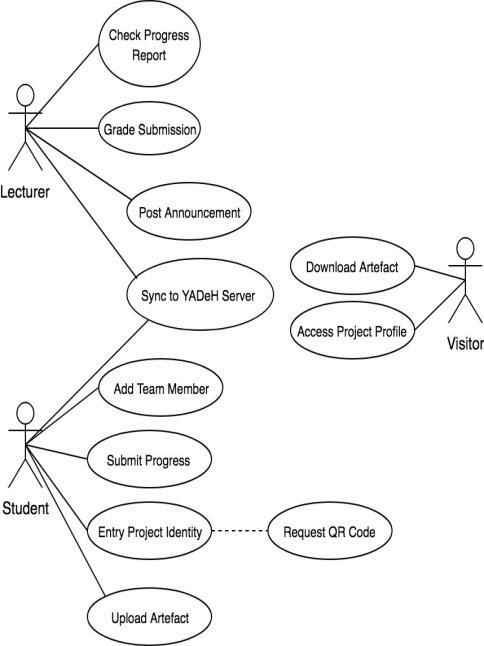 Fig. 2. Directory Structure of YADeH-node version
To activate the Flask application and WSGI web server, the user only needs to execute a single command.
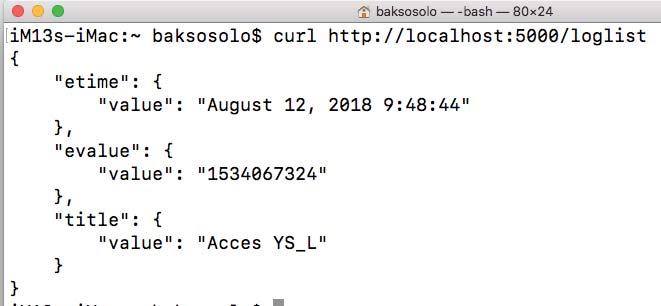 Fig. 3. WSGI activated by running .py files
By default, WSGI uses port 5000 to serve web requests.
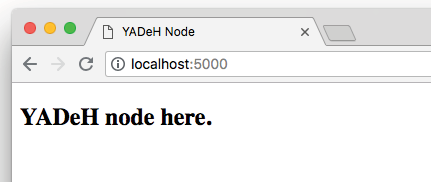 Fig. 4. Access Flask Application from a local device at port 5000
Flask uses the Jinja Templating Engine, making it easier to implement Bootstrap CSS for mobile responsiveness. With a mobile-friendly CSS framework, there is no need to develop a native mobile application. To support offline use, we implement SQLite for data storage (no need to install MySQL or server-based databases). Combining Flask, WSGI, SQLite, and Bootstrap CSS, a user can run YADeH-node on their laptop or a mini device such as APC Rock [22], connected to an access point for classroom use with no internet.
B. User Interactions
 Fig. 5. User Interaction with YADeH-node
One important feature of YADeH-node is uploading artifacts to YADeH-server. The user needs to configure the YADeH-server address, used to upload artifacts through the YADeH-server web service.
For web services, Flask provides Flask-RESTful API. We route the request /loglist to the LOCAL_LOG resource.
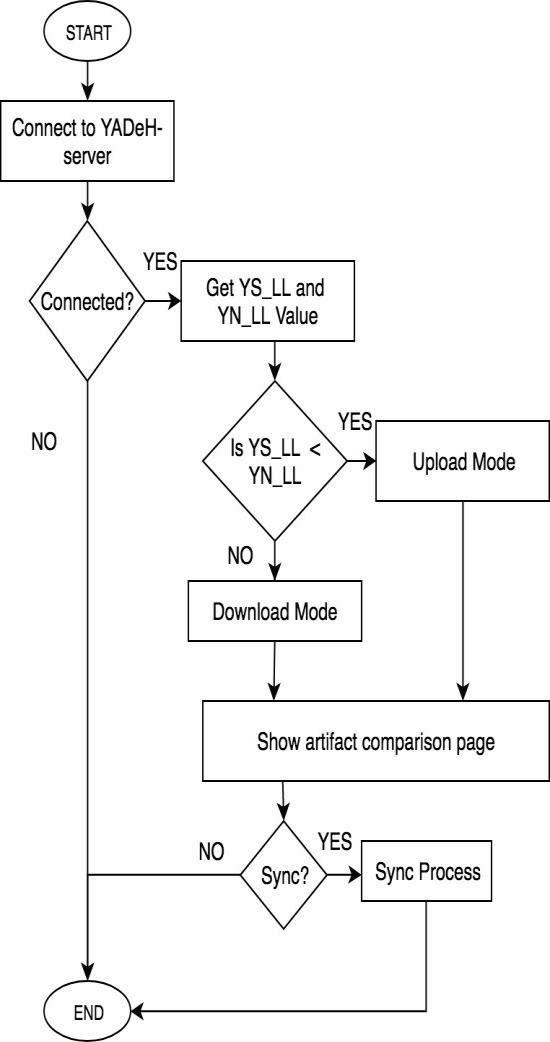 Fig. 6. Example Web Service Access
Using Flask-REST API, we get LOCAL_LOG from YADeH-server Log (YS_LL) and YADeH-node Log (YN_LL). These are used to know the newest activity. If YS_LL value is less than YN_LL value, the content from YADeH-node is the newer version, and "upload_mode" executes. Otherwise, "download_mode" downloads the artifacts from YADeH-server. In early development, mode selection uses the EPOCH time variable (the newer version has a bigger EPOCH time value).
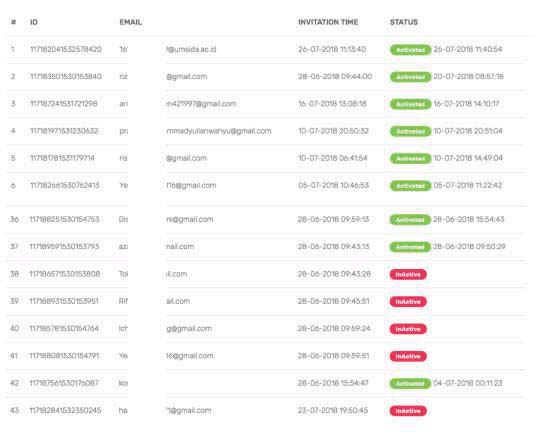 Fig. 7. Sync Process from YADeH-node to YADeH-server
IV. Research Discussion and Implementation
YADeH was tested with students at the Informatics Department, Faculty of Engineering, Universitas Muhammadiyah Sidoarjo in Academic Year 2017/2018. The author implemented Project Based Learning with two different groups among 6 class groups.
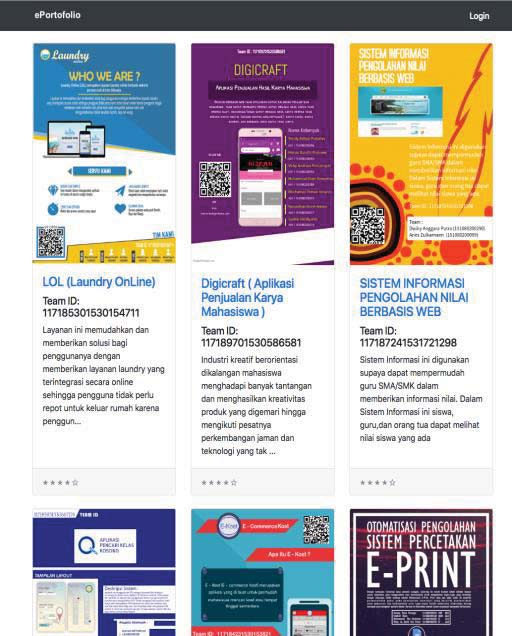 Fig. 8. YADeH student artifact submission interface
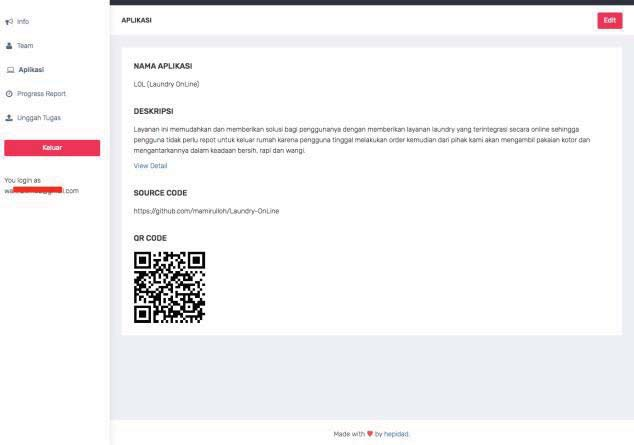 Fig. 9. Lecturer grading and evaluation view
The implementation demonstrated that both students and lecturers could use the web-based ePortfolio in offline classroom conditions, then synchronize artifacts to the central server when connected. The distributed, portable approach addresses the digital divide by removing the dependency on constant internet access and complex centralized installation.
V. Conclusion and Future Work
This paper presented YADeH, a portable and distributed ePortfolio developed with a Python microframework (Flask). The two-version architecture (server and node) enables ePortfolio use in both online and offline conditions. By running YADeH-node on a mini device with an access point, students and lecturers can use the ePortfolio in classrooms without internet, then synchronize to the central server in a distributed manner.
This approach addresses the digital divide in Indonesian higher education, supporting Project-Based Learning and Lab-Based Education even where internet access is unreliable. Future work includes improving the synchronization conflict resolution and adding real-time collaboration features.
References
[1] Industry 4.0 Strategic Initiatives, Ministry of Research, Technology and Higher Education Indonesia.
[2], [3] HEI adaptation for Industry 4.0 references.
[4], [5] Project-Based Learning references.
[6] Lab-Based Education (Japanese universities) references.
[7], [8], [9] ePortfolio in higher education references.
[10], [11] I. A. Kautsar et al., Lecturer Based Supportive Tools (LBST).
[12]–[14] Interoperability and web service-oriented architecture references.
[15] ePortfolio/LMS installation effort references.
[16], [17] Digital divide in Indonesia references.
[18] Higher education technology adoption references.
[19] Flask Web Framework documentation.
[20] Werkzeug WSGI library.
[21] WSGI specification.
[22] APC Rock mini device.
This is a preprint (author self-archived) version. The version of record is available at IEEE Xplore.