Redefining Data Provider: The REST Approach To Solve Indonesia Lecturer Administrative Problems
Authors: Irwan Alnarus Kautsar¹, Shin-Ichiro Kubota², Yasuo Musashi¹, Kenichi Sugitani¹
¹ Department of Computer Science and Electrical Engineering, Kumamoto University, Japan
² Department of Computer Science and Systems Engineering, University of Miyazaki, Japan
Published in: 2014 International Conference on Teaching, Assessment and Learning for Engineering (TALE), 8-10 December 2014, Wellington, New Zealand. pp. 175–178
DOI: 10.1109/TALE.2014.7062614
IEEE: https://ieeexplore.ieee.org/document/7062614/
Abstract
Directorate General Higher Education Institution of Indonesia (DGHEI) requests lecturers to provide data or report their academic activities as evidence. Lecturers need to make a portfolio or other document specified by DGHEI. We call these administrative issues. These issues become a problem when the DGHEI requests these reports from lecturers to be updated in the DGHEI Systems in a specific time frame.
The present paper discusses the problems that appear in the current system. Some problems lecturers face are: DGHEI Information Systems service unavailability. As a result of this analysis, a new methodology is proposed. The new approach uses REST (Representational State Transfer) to provide the lecturer data in a distributed manner, allowing sharing capabilities to the current system.
Keywords: REST Protocol; Distributed Systems; Authoring Tools; DGHEI
I. Introduction
The Directorate General Higher Education Institution of Indonesia (DGHEI) has been using the Web as a public service for more than a decade. The main role of DGHEI is to manage the Education systems at the higher education level, managing information from public and private universities, students, and lecturers.
For lecturers, their duty is not only education-related activities but also administrative services, such as writing a report about academic activities done in one semester. The DGHEI provides an online platform to upload their reports through several websites: SERDOS (Lecturer Certification System), SIPKD (Lecturer Career Development Information System), and FORLAP (used by academic staff to report university conditions).
The reason DGHEI was the pioneer to use the web as public service was to reduce information sharing time and improve accessibility. However, these services create other problems: repetitive activities by the user when uploading data. Lecturers upload almost similar data (Curriculum Vitae, academic activity) across multiple websites. Another web application, STUDI DIKTI, is for lecturers who received DGHEI scholarships, requiring similar data again.
This reporting/uploading activity causes several issues: data redundancy, load balancing problems, and user time consumption. This paper presents REST as an approach to solve those problems, developing a supportive tool that helps lecturers collect and record their academic activities. With REST web service, we propose a novel approach to enable the Institution (the lecturer Homebase) to become the Data Provider.
II. Problem Analysis
A. The Current DGHEI Information System
The DGHEI information systems can be considered a high concurrency system, accessible by more than 10,000 potential users (total lecturers from all universities in Indonesia).
Table I. Information System Provided by DGHEI
| Name | URL | User |
|---|---|---|
| SERDOS | serdos.dikti.go.id | Lecturer |
| SIPKD | sipkd.dikti.go.id | Lecturer |
| FORLAP | forlap.dikti.go.id | Lecturer, Academic Staff, Public |
1) FORLAP — Open to public since July 15, 2013. Manages data of HEIs, active students, and lecturers. Advantage: small probability of peak time (only administrative staff upload). Disadvantage: if there is mistaken data, the lecturer cannot change it directly.
2) SERDOS — Evaluates lecturer performance. Only selected lecturers can access it. Data redundancy occurs because lecturers upload similar documents (CV, portfolio).
3) SIPKD — Tracks what the lecturer has done in one semester. Because all lecturers must upload, SIPKD has a strong possibility to face peak time — and the server went down in the first month after release. To solve this, DGHEI scheduled access based on academic rank.
Table II. Accessibility Day Based on Academic Rank
| Academic Rank | Accessibility Day |
|---|---|
| Guru Besar (Professor) and Lektor Kepala | Monday and Tuesday |
| Lektor | Wednesday and Thursday |
| Asisten Ahli | Friday, Saturday and Sunday |
B. The Entity Data and Problem Issues
This scheduling solution has several issues: - The use of the web should not have boundaries with time regulations - The difference in the number of lecturers among ranks could create peaks on specific access dates - Different demographics of each area in Indonesia have different ease of internet access
The issues to address: (1) Lecturers upload the same document (CV, portfolio), causing repetition and redundancy — how to provide single valid data? (2) Solve high concurrency and provide server reliability at peak time.
III. REST Approach and Proposed Method
Representational State Transfer (REST) serves information with lightweight bandwidth consumption and a solid protocol to support the use of the web as distributed systems [2, 3]. REST focuses on how it represents resources — in any format (XML or plain text).
 Fig. 1. Resources Representation of Data
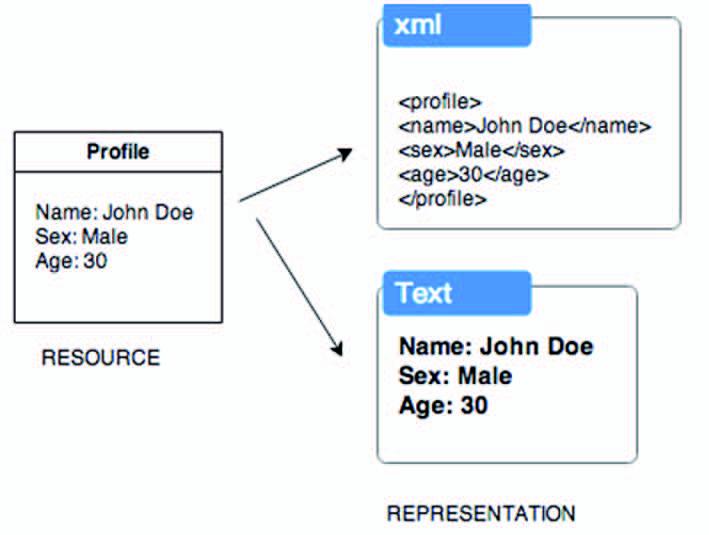 Fig. 2. Response from Web Server that REST ready
When using the REST approach, the uploaded document by the lecturer is the resource. Technically, to solve the peak problem, developers usually implement load balancing. Instead, we propose a distributed data collection: data is grabbed/collected institutionally with the REST approach, so the DGHEI IS is not the main target. Traffic is distributed to each lecturer institution.
We redefine who is the data provider. To control and avoid redundancy, lecturer data is centralized at their Homebase university. Lecturers do not upload all data directly to DGHEI/SIPKD, but upload the instrument requested to their Institution. Then the DGHEI/SIPKD server grabs the lecturer data from the lecturer institutions.
Terminology: - PDP = Pivot Data Provider (the lecturer) - IDP = Institutional Data Provider (the lecturer home base university) - IDC = Institutional Data Customer (DGHEI server, and also private companies willing to scout information to help grant research funds)
 Fig. 3. The Data Flow between PDP, IDP and IDC
For research purposes, we simulate data reported by lecturers to DGHEI using simple lecturer profiles (Name, Sex, Date of Birth, Address, Mobile Phone, Institution name).
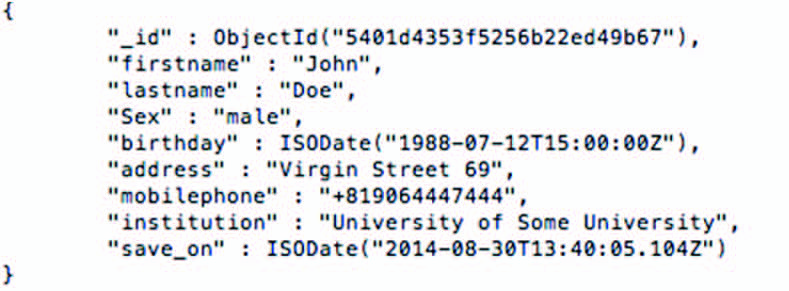 Fig. 4. The Simulation Scenario for REST Approach
IV. Implementation and Experiment Results
The data flow scenario's activities:
A. Creation — The lecturer creates/updates their public profile on the supportive tool hosted at the institution (IDP).
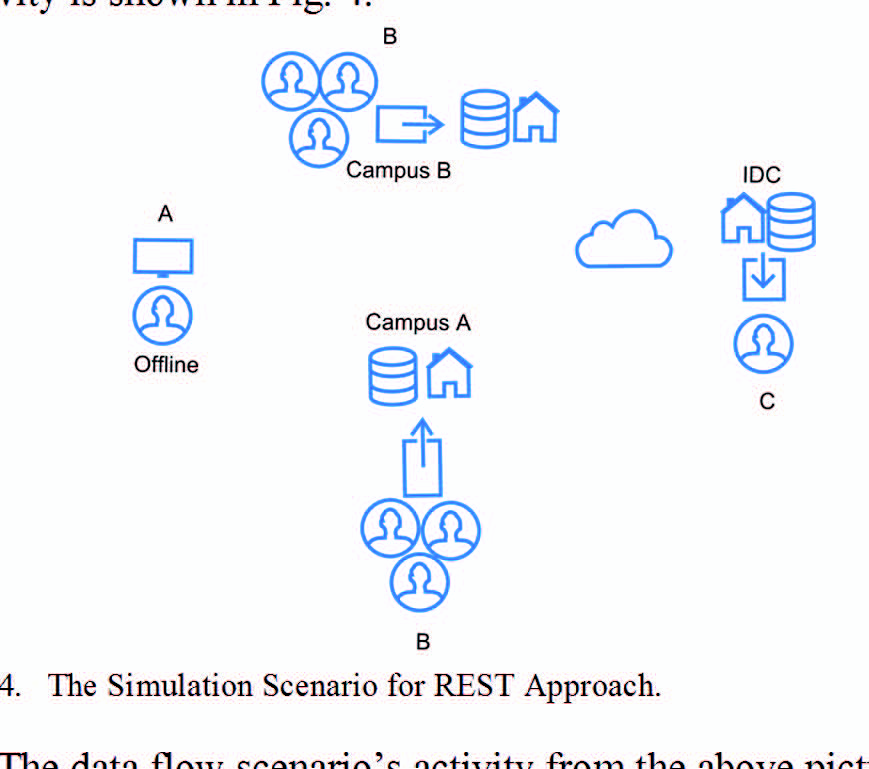 Fig. 5. Lecturer profile creation on the supportive tool
B. Data Provision — The institution (IDP) exposes the lecturer data through a REST web service endpoint.
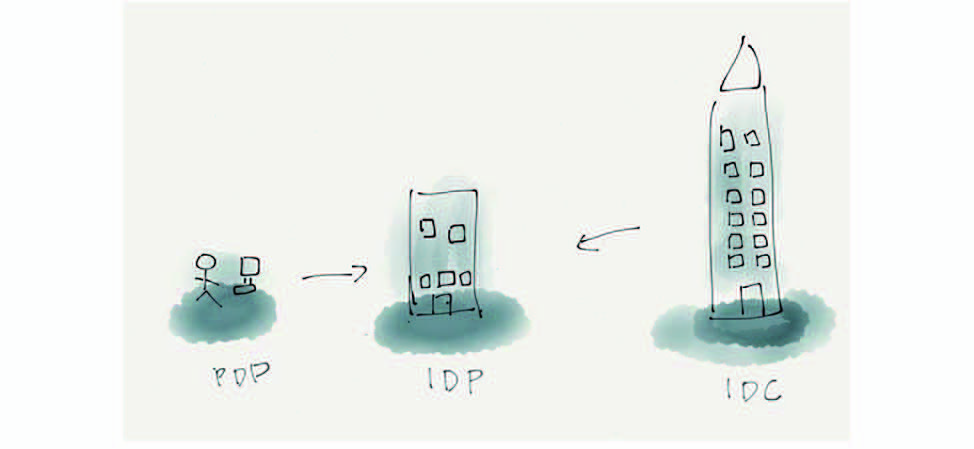 Fig. 6. Institutional data provided through REST endpoint
C. Data Consumption — The DGHEI server (IDC) grabs the data from the institutional REST endpoints, aggregating without the lecturer having to upload repeatedly.
 Fig. 7. Data consumption by DGHEI from institutional providers
This approach eliminates data redundancy (single valid source per lecturer at their institution) and distributes the server load away from the central DGHEI system, avoiding the peak-time bottleneck that forced the rank-based access scheduling.
V. Conclusion and Future Work
This paper proposed redefining the data provider role using the REST approach to solve Indonesian lecturer administrative problems. Instead of lecturers repeatedly uploading similar documents across multiple centralized DGHEI systems, data is maintained at the lecturer's home institution and exposed via REST web services. The DGHEI and other data customers then consume the data on demand.
This solves two core problems: data redundancy (single valid data source) and high concurrency/peak-time server failures (distributed load). Future work includes expanding the data entities beyond profiles and integrating with the existing DGHEI systems in production.
References
[1] Web-based information system reliability and concurrency references.
[2] R. T. Fielding, "Architectural Styles and the Design of Network-based Software Architectures" (REST).
[3] REST distributed systems references.
[4] Load balancing agent system references.
[5] Server reliability at peak time references.
(Full reference list available in the version of record.)
This is a preprint (author self-archived) version. The version of record is available at IEEE Xplore.